NordicTrack Commercial 1750 review: great with iFIT, pricey without it
With an iFIT subscription, the NordicTrack Commercial 1750 is on paper the best coached-workout treadmill we know of, thanks to motorized decline and auto-adjusting incline. Without one, you're paying about $600 more than a Sole F80 for a screen you can't use as a tablet.
We may earn a commission from links. It never changes our picks. How we make money
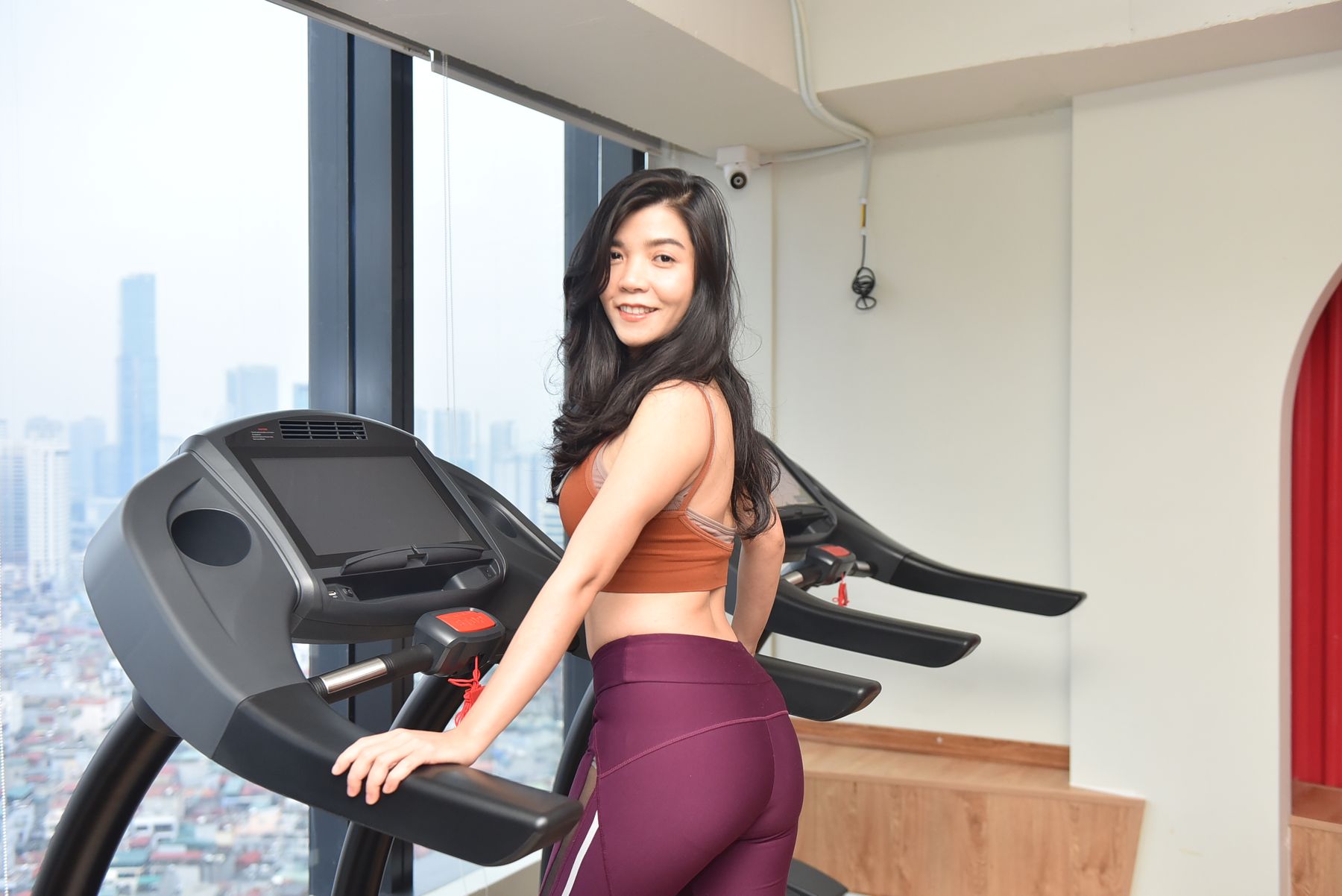 80 × 38 in open
NordicTrack Commercial 1750 Treadmill
Our take: With iFIT, workouts that move the incline and decline for you make it easy to keep showing up. Without it, you're paying for a big screen you can't cast to.
Usually $1,999 to $2,499 (list $2,499). Prices change often, so the retailer has today's.
Pros
- Motorized decline to 3%
- 22 x 60 in belt and 3.5 CHP motor
- Trainer-controlled incline with iFIT
- 14-inch screen pivots for floor workouts
- Cushioned deck softens foot strike
Cons
- Screen does little without iFIT
- 300 lb rating, lower than rivals
- Only 2 years parts, 1 year labor
- About 340 lb and heavy to fold
We haven't bench-tested our own NordicTrack Commercial 1750 yet. This review is built from the published specs, the warranty and how the machine is designed. When our measurements are in, they'll appear on this page and the update history at the bottom will say so.
Is the NordicTrack Commercial 1750 worth it?
Only if you’ll pay for iFIT. With a subscription, it’s on paper the best home treadmill for people who want to be coached: a trainer picks the route, the deck tilts up to 12% and drops to 3% decline as the road does, the speed follows, and you can run for 40 minutes without touching a button. Without iFIT, it’s a good 3.5 CHP treadmill with a 22-inch belt and a cushioned deck, plus a 14-inch screen you can’t install anything on, for about $600 more than a Sole F80 that handles the running just as well.
So decide whether you’ll keep paying before you decide whether to buy. At time of writing, iFIT costs about $180 a year for one person or about $40 a month for a family plan, which adds roughly $900 to $2,400 over five years. The treadmill itself typically sells for $1,999 to $2,499. Check both prices before you commit.
We haven’t bench-tested our 1750 yet, so this review is built from NordicTrack’s specs and what iFIT does.
Running on it
The belt is 22 x 60 inches and the motor is 3.5 CHP, the same headline numbers as the F80. The deck is softer than a Sole’s. Some runners call that cushioned and others call it bouncy, and both are right.
Decline is the feature. Three percent doesn’t sound like much until you’ve run a long downhill on a treadmill that can do it and felt your quads the next day, the way you do after a real descent. Combine it with 12% incline and iFIT’s auto-adjust, and a treadmill run starts to feel like a route.
Speed and incline have one-touch buttons on the console and up-down keys on the arms. They’re fine: slower than the dials on the Horizon 7.0 AT, faster than a lot of touchscreens.
Space, noise and setup
It’s heavy. NordicTrack quotes about 340 lb assembled, so plan on two people and a hand truck for any stairs, and don’t expect to move it once it’s built. The screen mast and its cabling make for a longer build than most treadmills, and we’ll time it.
Open, it takes 80 by 38 inches and stands 65 inches tall. Add 78 inches of clearance behind the deck, and in a 12-by-12 room that’s most of the floor. Folded, NordicTrack quotes about 42 inches from the wall. The hydraulic strut handles the weight, but lowering it is a two-hand job.
It should be quiet for its size. Cushioned decks absorb foot strike better than firm ones, and foot strike is what the room below hears. The screen also draws power at idle to stay awake, more than a plain LED console would, so we’ll measure watts at the wall.
The screen, with and without iFIT
With iFIT, the 14-inch pivoting touchscreen is the point of the machine. Trainers lead filmed routes and studio classes, the treadmill follows their speed and grade, and the library is deep enough that a month of workouts needn’t repeat. The screen pivots toward the floor for strength and stretching sessions beside the deck.
Without iFIT, in manual mode, every button still works and you get a handful of built-in workouts and a large speed readout. You can’t cast to it, install apps or use it as a tablet. If that’s how you’d use it, the F80 is the better buy. Our Sole vs NordicTrack comparison puts the two brands side by side.
Where it falls short
The weight rating. At 300 lb it’s lower than the F80’s 350 and the Bowflex T9’s 400, and we’d keep runners under about 250 lb on it.
The warranty. Ten years on the frame is fine, but two years on parts and one on labor is short for a machine at this price. Register it on day one.
And the subscription, as above. That’s the business model. Just go in knowing what it costs. If the 1750’s price is the sticking point, our NordicTrack 1750 vs 1250 comparison covers its cheaper sibling.
Against the Peloton Tread
The Peloton Tread has the deeper class library and a bigger 23.8-inch screen. It also has a 59-inch belt on a machine that doesn’t fold, a 12.5% top incline and no decline, and it typically costs more, $2,995 to $3,295. The 1750 is the better treadmill and the Peloton is the better class experience. Runners should take the 1750; walkers and joggers who live for the leaderboard can go either way. Our Peloton vs NordicTrack comparison goes deeper.
What we’ll measure
Once our retail unit is built in a 12-by-12 spare room, we’ll measure noise at 3, 6, 9 and 12 mph from three feet with a 200 lb runner, incline and decline at the top and bottom settings with a digital level, belt speed against a calibrated wheel, watts at the wall including the screen’s idle draw, the folded footprint and assembly time. Then we’ll spend a month on it, with and without iFIT. How we test explains the method.
How we rated the NordicTrack Commercial 1750
- Motor and deck
- 5.0
- 3.5 CHP, 22 x 60 in belt, 300 lb limit
- Incline and features
- 4.5
- 12% incline, 3% decline, 12 mph top speed
- Warranty
- 3.9
- 10-year cover on the longest-covered part
- Fits a home
- 3.7
- 80 x 38 in open, folds
- Value
- 3.9
- Fair for what you get
Our rating is out of 5 and uses the same formula for every machine in a category: motor and deck, features, warranty, how well it fits a home, and value for the typical price. Until we bench test a machine, the score comes from its published specs. How we rate
What we measure
Bench test scheduledWe haven't measured this one yet. When our unit is set up, it gets the same checks as every machine, and the results go here:
- Noise from 3 ft at 3, 6, 9 and 12 mph
- Incline at the top setting, with a digital level
- Watts at the wall, idle, walking and running
- Assembly time for one person
- Folded size, measured with a tape
Floor plan, from the maker's dimensions
Who should buy the NordicTrack Commercial 1750
Buy it if
- Anyone who'll keep paying for iFIT
- Trail runners who want decline
- Households that want trainer-led classes on the machine
Look elsewhere if
- Anyone who dislikes subscriptions
- Users over 300 lb
- Tight budgets: the Sole F80 does the running for $600 less at list
Usually $1,999 to $2,499 (list $2,499). Prices change often, so the retailer has today's.
NordicTrack Commercial 1750 specs
| Specification | NordicTrack Commercial 1750 |
|---|---|
| Motor | 3.5 CHP |
| Belt | 22 x 60 in |
| Speed | 0–12 mph |
| Incline | -3% to 12% |
| User weight limit | 300 lb |
| Footprint (L × W × H) | 80 × 38 × 65 in |
| Folded | 42 × 38 × 71 in |
| Machine weight | 340 lb |
| Console | 14 in pivoting touchscreen |
| Warranty | 10 yr frame, 2 yr parts, 1 yr labor |
| Status | Current model · 2012–present (current generation 2022) |
Manufacturer's published specs. We check dimensions with a tape when our unit arrives.
How it compares with its closest rivals
Swipe sideways to see every model
| NordicTrack Commercial 1750(this review) | Sole F80 | Peloton Tread | |
|---|---|---|---|
| Our rating | 4.2 / 5 | 4.5 / 5 | 3.5 / 5 |
| Typical price | $1,999–2,499 | $1,599–1,899 | $2,995–3,295 |
| Motor | 3.5 CHP | 3.5 HP DC | 3.0 HP |
| Belt | 22 x 60 in | 22 x 60 in | 20 x 59 in |
| Top speed | 12 mph | 12 mph | 12.5 mph |
| Incline | -3% to 12% | 15% | 12.5% |
| Weight limit | 300 lb | 350 lb | 300 lb |
| Footprint | 80 × 38 in | 82 × 37 in | 68 × 33 in |
| Folds | Yes | Yes | No |
| Warranty | 10 yr frame, 2 yr parts, 1 yr labor | Lifetime frame and motor, 3 yr deck/electronics/parts, 1 yr labor | 5 yr frame, 3 yr motor and belt, 12 mo parts and labor |
Manufacturer specs. Measured noise is added once we've tested a machine.
Usually $1,999 to $2,499 (list $2,499). Prices change often, so the retailer has today's.
Is the NordicTrack Commercial 1750 right for you?
Answer three quick questions and we'll give you a straight answer. No email needed.
NordicTrack Commercial 1750 questions, answered
Can you use the NordicTrack 1750 without iFIT?
Yes, in manual mode. You get full control of speed, incline and decline, plus a few built-in workouts, and nothing stops working if you cancel. What you lose is most of the screen's usefulness: you can't cast to it or install apps, so the 14-inch display becomes a large speed and distance readout. If that's your plan, the Sole F80 is better value.
How much does iFIT cost?
At time of writing, about $180 a year for one person or about $40 a month for a family plan; check iFIT's site for current pricing. Over five years that's roughly $900 to $2,400 on top of the machine, which can approach what you paid for the treadmill itself. Factor that in before you compare the 1750 with subscription-free machines.
How loud is the NordicTrack 1750?
We haven't measured ours yet; we'll test at four speeds from three feet. Treadmills in this 3.5 CHP class typically sit in the mid 60s dB at 6 mph, about conversation level. NordicTrack's cushioned decks also tend to carry less foot strike through a floor than firmer decks, and that matters more to the people downstairs than the motor does.
Does the NordicTrack 1750 have decline?
Yes. It goes from 3% decline to 12% incline, both motorized. In an iFIT workout the trainer controls both as the route goes up and down, which is the main thing that separates it from a Sole F80. In manual mode you set the decline yourself with the console buttons or the keys on the arms.
What is the NordicTrack 1750 weight limit?
The rating is 300 lb, lower than the Sole F80's 350 lb and the Bowflex T9's 400 lb. For runners, we'd set the practical limit around 250 lb so the frame and motor have a comfortable margin. Walkers can use the full rating. A heavier runner will be better served by one of those higher-rated machines.
How much space does the NordicTrack 1750 need?
NordicTrack quotes 80 x 38 in open and 65 in tall. Add 78 in of clearance behind the deck for safety, so you need roughly 13 ft of length in total. Folded, it's quoted at about 42 x 38 x 71 in. We'll check both footprints with a tape measure, and if it's headed for a basement, check the ceiling too.
NordicTrack 1750 or Sole F80?
If you'll pay for iFIT, the 1750, because trainer-controlled incline and decline are the reason to own it. If you won't, the F80 has the same 22 x 60 in belt, a 350 lb rating and a lifetime frame and motor warranty, and it typically costs about $600 less. For a runner who just wants a solid folding treadmill, the F80 is the easier pick.
NordicTrack 1750 or Peloton Tread?
The Peloton Tread has the deeper class library and the bigger screen, but a 59-inch belt, no decline and no fold. The 1750 has a 60-inch belt, decline to 3% and a hydraulic fold, and it usually costs less. Runners should take the 1750. People who mostly walk and jog and care most about classes can go either way.
What warranty does the 1750 have?
Ten years on the frame, two years on parts and one year of labor. That's shorter on parts and labor than we'd like at this price, and well short of Sole's lifetime frame and motor coverage. Register the machine as soon as it's set up and keep your order email, because you'll need both if anything goes wrong.
Does the NordicTrack 1750 fold?
Yes, with a hydraulic assist that lowers the deck in a controlled way. It's still a heavy fold, since NordicTrack quotes the machine at about 340 lb assembled, so lowering it takes two hands. Folded, it's quoted at about 42 x 38 x 71 in, which frees up a good chunk of floor between runs.
Ready to buy the NordicTrack Commercial 1750?
With iFIT, workouts that move the incline and decline for you make it easy to keep showing up. Without it, you're paying for a big screen you can't cast to.
Usually $1,999 to $2,499 (list $2,499). Prices change often, so the retailer has today's.
Update history (2)ShowHide
- November 5, 2026Rewritten for clarity. Added key takeaways, pros and cons, and our rating.
- October 18, 2026First published, written from the manufacturer's specs ahead of our bench test. Test figures are illustrative until our measurements replace them.